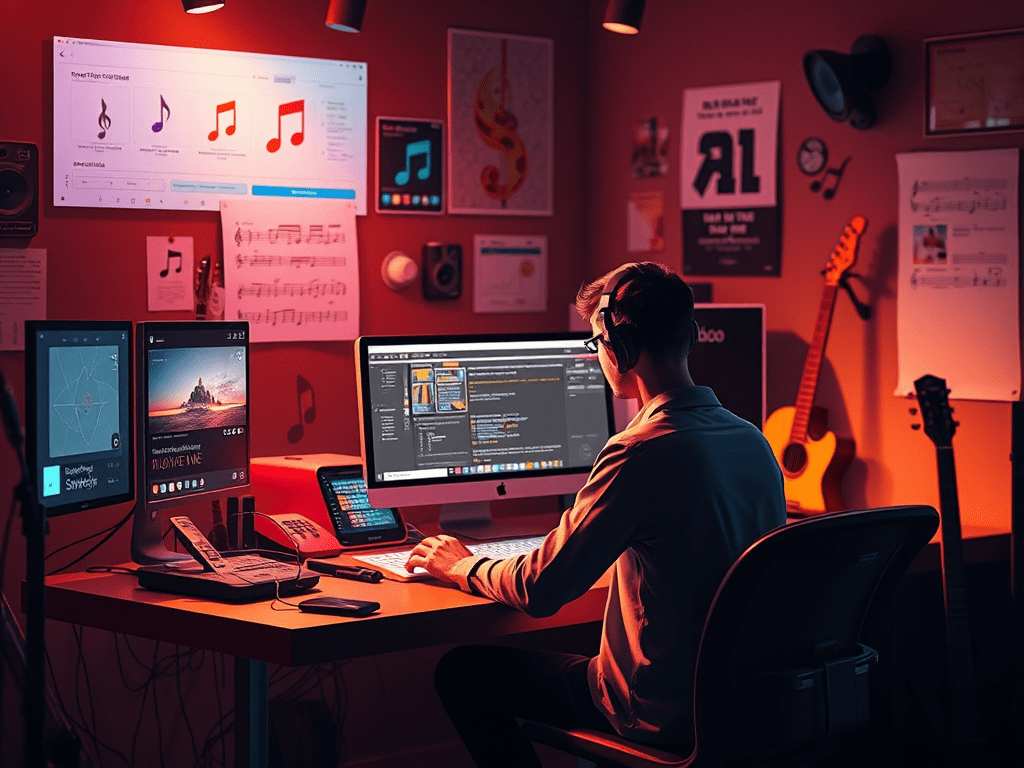
The music industry has always been quick to embrace new technology, from the electric guitar to synthesizers to digital recording. Today, we’re witnessing another seismic shift as artificial intelligence and advanced digital tools reshape how songs are conceived, crafted, and brought to life. For the tech-savvy songwriter, this isn’t about replacing human creativity—it’s about amplifying it.
The Rise of AI-Assisted Creativity
Modern songwriters are discovering that AI can be their most versatile collaborator. Tools like ChatGPT, Claude, and specialized music AI platforms have become invaluable for brainstorming sessions, helping writers explore new lyrical territories and experiment with rhyme schemes they might never have considered.
These AI assistants excel at generating initial concepts and breaking through creative blocks. A songwriter might input a theme or emotion and receive dozens of potential angles to explore. The magic happens when human intuition meets artificial intelligence—the AI provides the raw material, while the songwriter shapes it into something meaningful and authentic.
Specialized AI melody generators and chord progression tools are equally transformative. Rather than staring at a blank page (or screen), songwriters can quickly generate musical foundations to build upon. This rapid prototyping allows for more experimentation in less time, leading to more diverse and innovative compositions.
Seamless Production Integration
The line between writing and producing continues to blur, and today’s songwriters are taking advantage of this convergence. Writing directly within a Digital Audio Workstation (DAW) means ideas can be captured with their intended sonic context intact. Real-time collaboration features allow multiple writers to work on the same project simultaneously, regardless of their physical location.
Voice memos and smartphone apps have become indispensable tools for capturing lightning-in-a-bottle moments. Whether it’s a melody that strikes during a morning jog or a lyrical phrase overheard in conversation, these tools ensure no idea gets lost. The best part? Modern workflows allow for seamless transfer from mobile capture to professional production environments.
AI-powered mixing and mastering tools have democratized the demo process. Songwriters can now create professional-sounding demonstrations of their work without needing expensive studio time or extensive technical knowledge. This capability is particularly valuable for pitching songs or collaborating with artists remotely.
Data-Driven Creative Decisions
While art and analytics might seem at odds, savvy songwriters are finding ways to let data inform—not dictate—their creative choices. Streaming platforms provide unprecedented insight into listener behavior, revealing not just what people are listening to, but how they’re listening to it.
Platforms like Spotify for Artists offer detailed analytics about audience engagement, showing which sections of songs resonate most strongly with listeners. Social listening tools can identify emerging themes and cultural conversations that might inspire new material. This data doesn’t tell songwriters what to create, but it can help them understand the cultural moment they’re creating within.
Genre analysis tools can reveal successful patterns in melody, rhythm, and song structure. While formulaic adherence to these patterns would be creatively limiting, understanding them provides a foundation for intentional innovation.
The New Age of Collaboration
Geography is no longer a barrier to creative collaboration. Cloud-based platforms enable songwriters to work together regardless of location, with changes syncing in real-time across devices. Private SoundCloud links, collaborative DAW projects, and specialized songwriting platforms have created a global creative community.
Real-time editing tools allow multiple writers to work on lyrics simultaneously, creating a dynamic creative process that mirrors in-person collaboration. Video conferencing integration means writers can maintain the personal connection that makes collaboration effective while leveraging the convenience of remote work.
Smart Workflow Solutions
Organization and workflow optimization might not be glamorous, but they’re crucial for productive creativity. Advanced metadata tagging systems help songwriters track their growing catalogs of ideas, making it easy to find that perfect bridge melody from six months ago or locate songs that fit specific moods or themes.
AI transcription tools can convert hummed melodies into notation, allowing songwriters to focus on creativity rather than technical transcription. Rhythm and tempo analysis ensures songs work in their intended contexts, whether that’s a streaming playlist or a live performance.
The Human Element Remains Essential
Despite all these technological advances, the most important element in songwriting remains unchanged: authentic human emotion and experience. Technology serves as a powerful amplifier and facilitator, but it cannot replace the songwriter’s unique perspective, emotional intelligence, and ability to translate universal human experiences into compelling music.
The most successful tech-savvy songwriters use these tools strategically, understanding that technology should enhance rather than replace their creative instincts. They maintain control over the artistic vision while leveraging AI and digital tools to explore possibilities they might never have discovered otherwise.
Looking Forward
As AI and music technology continue to evolve, the possibilities for songwriters will only expand. The writers who thrive will be those who embrace these tools while maintaining their commitment to authentic expression and emotional truth. They’ll use technology as a creative partner, not a creative crutch.
The future belongs to songwriters who can navigate both the digital and emotional landscapes with equal skill, crafting songs that leverage the best of both human creativity and artificial intelligence. In this new paradigm, the question isn’t whether to embrace technology, but how to use it in service of better, more meaningful music.
The tools are more powerful than ever. The question is: what story will you tell with them?
Make a one-time donation
Make a monthly donation
Make a yearly donation
Choose an amount
Or enter a custom amount
Your contribution is appreciated.
Your contribution is appreciated.
Your contribution is appreciated.
DonateDonate monthlyDonate yearly The Muse Be Willing
Leave a comment